Train for the Trail

For outdoor enthusiasts who train at home

The garage gym and the trail are not separate worlds. Strength training in a small space supports hiking, climbing, and trail running in ways that are specific and measurable.

The Connection

Why strength training supports outdoor performance

Carrying a 40 lb pack up a steep trail is a loaded carry. Pulling yourself over a boulder is a pull-up variation. Descending a technical trail for hours is a single-leg endurance exercise. The movements trained in a garage gym translate directly to outdoor demands.

The relationship works in both directions. Outdoor activities develop cardiovascular capacity and movement variability that pure gym training doesn't replicate. The combination of structured garage training and outdoor activity covers a wider range of physical capacity than either alone.
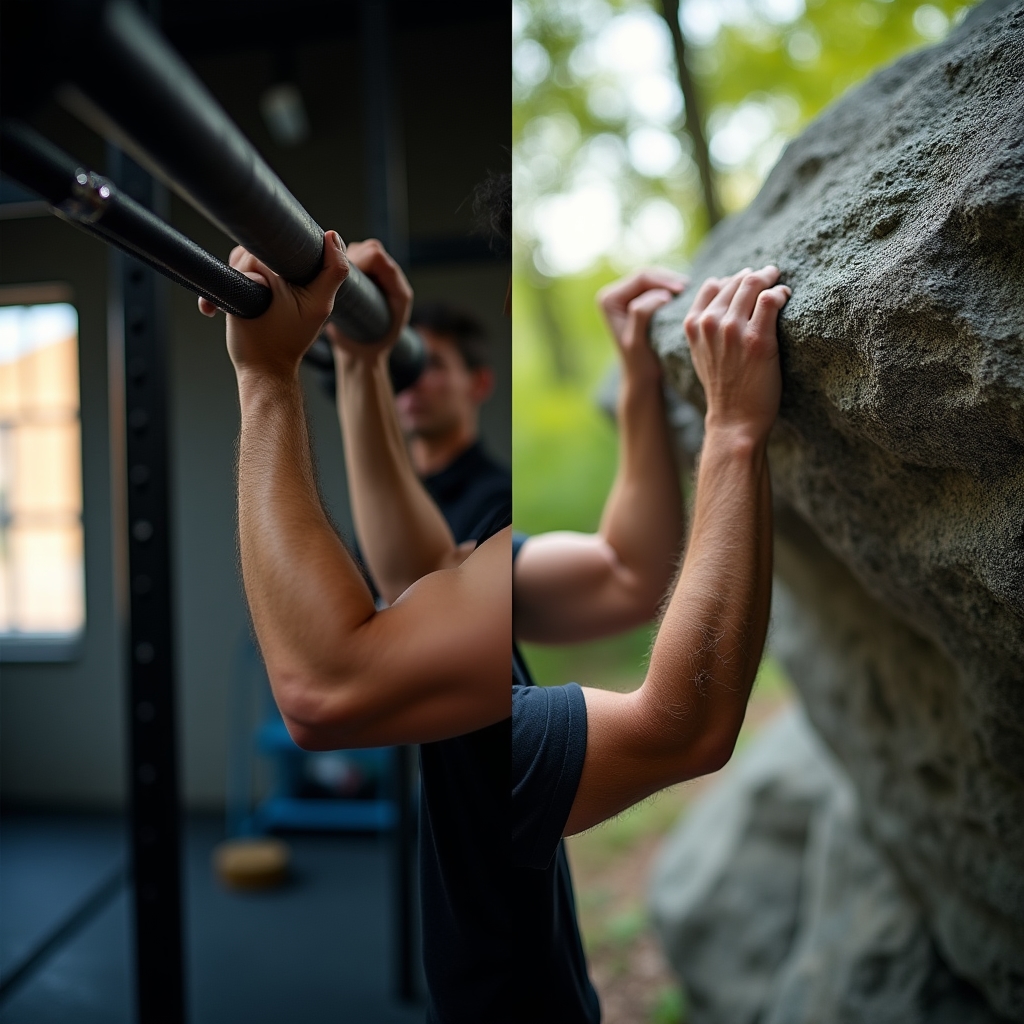
Person transitioning from garage gym training to outdoor hiking with a loaded pack
Activity Focus

What to train for different outdoor activities

Each outdoor activity has specific physical demands. These are the garage gym training priorities that address those demands most directly.

Hiking and Backpacking

Single-leg strength is the primary training priority for hikers. Step-ups with a loaded barbell, Bulgarian split squats, and single-leg Romanian deadlifts build the quad and glute strength that makes steep descents manageable. Loaded carries, done with farmer handles or a loaded barbell, replicate the demands of pack carrying directly.

Hip hinge patterns address the lower back fatigue that comes from hours under a pack. Deadlifts and good mornings strengthen the posterior chain in the position that matters. This doesn't require heavy loads. Consistent training with moderate weight over time is what builds the capacity.

Climbing

Pull strength and grip endurance are the limiting factors for most recreational climbers. Pull-up variations, ring rows, and hanging from a bar all build the pulling capacity that translates to the wall. The pull-up bar in your garage gym is more relevant to climbing than almost any other piece of equipment.

Core stability under load matters for body tension on the wall. Hollow body holds, hanging knee raises, and loaded carries all contribute. The barbell is useful here for overhead pressing, which builds shoulder stability in the overhead position that climbing requires.

Trail Running

Trail runners benefit from single-leg strength and hip stability. The uneven terrain of trail running demands lateral stability that flat road running doesn't develop. Step-ups, single-leg deadlifts, and lateral band walks address the hip abductor weakness that often underlies trail running injuries.

Calf and Achilles resilience matters more on trails than roads because of the constant elevation change. Weighted calf raises and single-leg work build the tissue capacity to handle repeated downhill loading. These are easy to add to any barbell session as accessory work.

Balancing the garage and the trail

Garage training and outdoor activity can coexist in the same week without competing. The key is treating them as complementary rather than substitutes.

Schedule around your outdoor goals

If you have a long hike on Saturday, don't do heavy leg work on Friday. Structure your strength sessions around your outdoor commitments, not the other way around. The garage gym serves the outdoor activity, not the reverse.

Use the off-season differently

Winter months or the off-season for your primary outdoor activity are a useful time to focus more on the garage gym. Building a base of strength during lower activity periods means you arrive at the season with more capacity than when you left it.

Recovery is shared

A long day on the trail counts as training stress. Your body doesn't distinguish between a hard squat session and a hard mountain day. Account for outdoor activity when planning your garage sessions and don't add heavy training on top of already demanding weekends.